
Embarking on our recent client engagement, we assisted a business grappling with challenges in its current MSP (Managed Service Provider) agreement. A growing frustration with sluggish response times prompted a reevaluation of their technology partnership. Guiding them through the process of selecting a new provider, outlining specific requirements, obtaining bids, and scrutinizing agreements, we’ve distilled key insights to help businesses navigate potential pitfalls in their MSP contracts. From avoiding unnecessary legal jargon to safeguarding against arbitrary rate changes, our guide ensures a seamless integration of technology language, protecting your business in the ever-evolving landscape of MSP services.
1. Watch Out for Unnecessary Legal Jargon
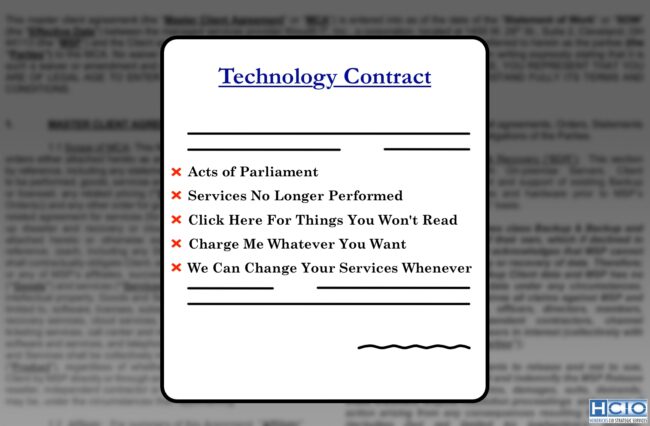
Encountering unnecessary legal jargon in contracts is not uncommon. For instance, a peculiar reference to Acts of Parliament found its way into a local U.S.-based company’s agreement. This kind of oversight often stems from a rush to adopt standard templates without a meticulous review. Our recommendation? Read your agreements thoroughly before signing, eliminating irrelevant language that could expose your company to unforeseen IT Managed Service Provider contract pitfalls.
2. Align Contracted Services with Current Offerings
As MSPs shift towards unlimited support models, we’ve noticed outdated references, like block hours, lingering in contracts. It’s essential to conduct due diligence to ensure your IT Managed Service Provider contract accurately reflects the services provided. Removing obsolete language not only maintains clarity but also ensures a more accurate representation of your partnership, steering clear of potential pitfalls.
3. Uncover Hidden Pitfalls in Incorporated Links
Many contracts include links to additional terms and conditions. It’s easy to overlook these, assuming they won’t impact you. However, failing to find and review these linked documents can lead to unintended consequences. Make it a practice to verify links, print out referenced terms, and insist on the inclusion of notification terms within the IT Managed Service Provider contract itself to avoid hidden pitfalls.
4. Guard Against Arbitrary Rate Changes
Some contracts permit providers to change labor rates without notice, potentially causing financial strain. Negotiate fixed rates for the contract’s duration to avoid unpleasant surprises. This straightforward adjustment promotes transparency in billing and prevents unexpected increases in IT Managed Service Provider contract rates.
5. Protect Your Business from Service Changes
Language allowing MSPs to unilaterally alter or withdraw services without notice poses a risk to business stability. Insist on terms requiring prior written approval for any changes to services. In case of service discontinuation, secure a corresponding reduction in pricing to ensure fair and equitable arrangements, protecting your business from potential IT Managed Service Provider contract pitfalls.
Conclusion: Invest in a Comprehensive Review
Many small businesses may overlook the intricacies of MSP contracts due to urgency or lack of understanding. However, neglecting a thorough review can lead to significant consequences. If technical jargon presents a challenge, consider seeking professional assistance to ensure a seamless integration of technology language with your business needs in your IT Managed Service Provider contract.
In conclusion, we invite you to share your experiences and challenges with technology contracts in the comments below. If you require guidance in navigating the complexities of your MSP contract and avoiding potential IT Managed Service Provider contract pitfalls, don’t hesitate to reach out. We’re here to help your business thrive in the ever-evolving landscape of IT services.